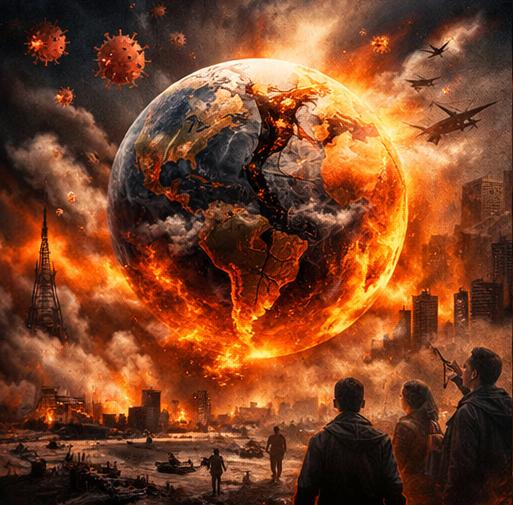
- Will the World Ever Attain Peace?
For centuries, humanity has longed for a world free from war, suffering, and unrest. From global treaties to peace movements, countless efforts have been made to create harmony among nations and individuals. Yet, despite these attempts, conflict and instability persist. This raises a profound question: Will the world ever truly attain peace?
One perspective on this issue comes from the Bible, particularly Revelation 12:12, which paints a sobering picture of the future. The verse warns that the earth will face intensified trouble because “the devil has come down to you, having great wrath, knowing that he has a short time.” For those who regard this scripture as prophetic truth, it suggests that rather than improving, the world’s condition may grow increasingly turbulent.
A World Under Pressure
Looking at current global trends, many would argue that the world already reflects this warning. Wars, political instability, economic struggles, environmental crises, and rising social tensions seem to dominate headlines. While advancements in technology and communication have connected people like never before, they have also amplified divisions and conflicts.
If Revelation 12:12 is taken as a lens for understanding world events, these challenges are not random. Instead, they are part of a broader spiritual struggle—one that influences human systems and contributes to unrest. The idea here is not merely about physical conflict, but about a deeper moral and spiritual decline affecting societies worldwide.
What Lies Ahead?

According to this biblical viewpoint, the immediate future may not bring the peace many hope for. Instead, the world could experience:
- Increased conflict and unrest – Both on a global scale and within communities
- Moral and spiritual challenges – A continued shift away from values that promote unity and compassion
- Heightened uncertainty – Economic, environmental, and political instability
This perspective suggests that human efforts alone may not be sufficient to establish lasting peace. History seems to support this idea: despite progress, every era has faced its own share of turmoil.
Is There Any Hope for Peace?
While Revelation 12:12 highlights distress, it is only one part of a larger biblical narrative. Other passages speak of a future where peace will eventually be established—not by human systems, but through divine intervention. This introduces a key idea: that true and lasting peace may not be achievable through human effort alone, but through a transformation beyond current world structures.
For believers, this offers hope. The present state of the world, though troubling, is not seen as the final chapter. Instead, it is part of a process leading to a future resolution where peace is restored in a more permanent and meaningful way.
Conclusion
So, will the world ever attain peace? If one considers Revelation 12:12 as a valid prophecy, the answer is complex. In the near term, the outlook may appear bleak, with increasing challenges and unrest. However, the broader message suggests that peace is not impossible—it is simply not something the world, in its current state, can fully achieve on its own.
This perspective invites readers to reflect not only on global events, but also on deeper questions about human nature, spirituality, and the ultimate source of peace. Whether one interprets these ideas literally or symbolically, they encourage a thoughtful examination of what the future may hold—and where true hope can be found.